
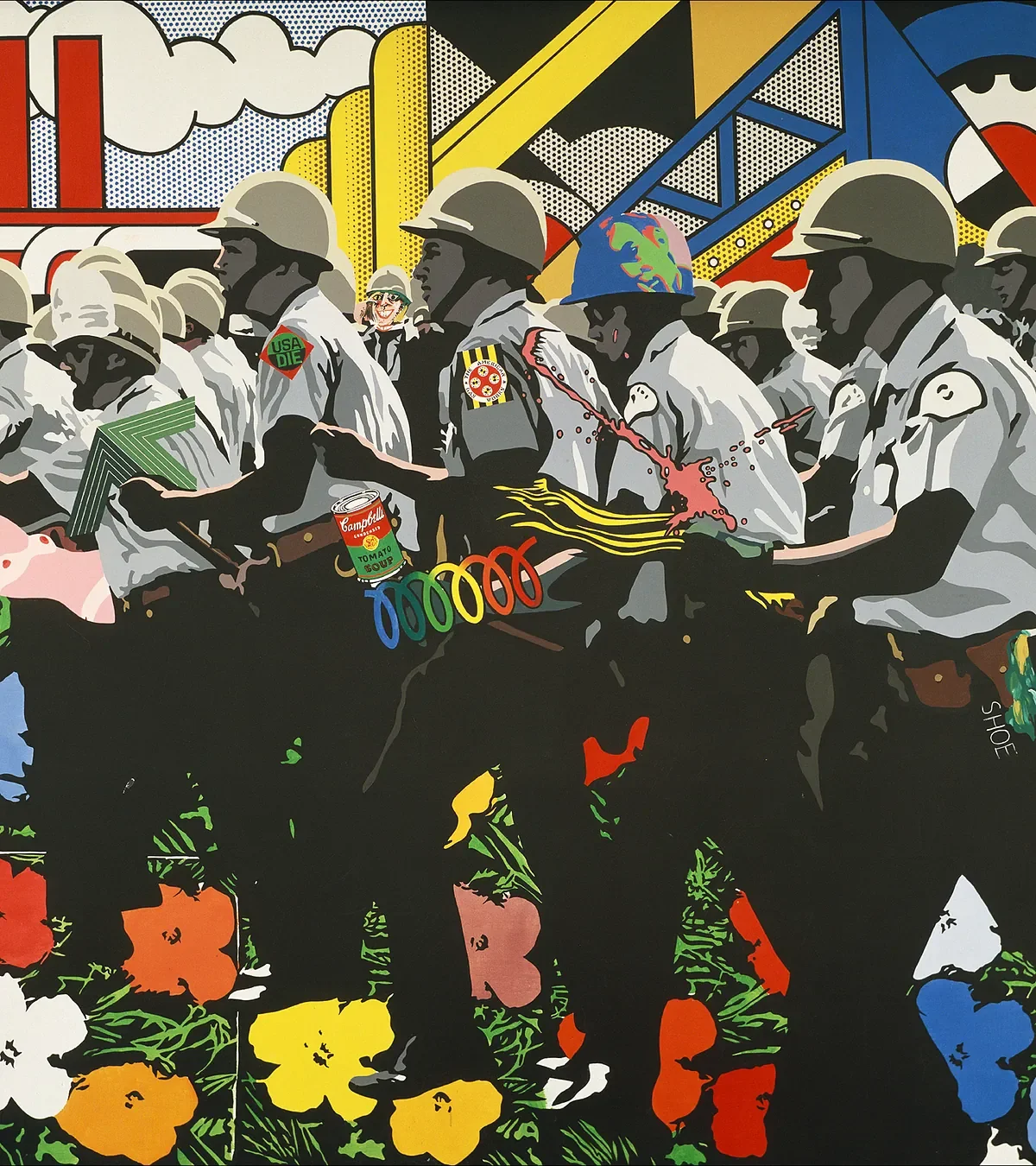
Equipo Crónica. Pim-Pam-Pop, 1971
PIM PAM POP
March 5th - April 25th, 2026
Opera Gallery
Calle de Serrano, 56. Madrid. Spain
A carefully curated selection of works by representatives of the pop art movement is on display at the Opera Gallery in Madrid. The group exhibition takes its title from Pim-Pam-Pop (1971) by Equipo Crónica, a key piece from their Police and Culture series. In this iconic painting, police officers carry pictorial figures instead of weapons as they cross a field of flowers inspired by Warhol, all against an industrial background reminiscent of Fernand Léger and Roy Lichtenstein. Both amusing and disturbing, the work embodies the visual language and critical stance of Spanish pop art.
Among the artists on display are key international figures such as Keith Haring, Roy Lichtenstein, Takashi Murakami y Andy Warhol. As well as their main Spanish representatives: Eduardo Arroyo, Rafael Canogar, Equipo Crónica, Juan Genovés, Luis Gordillo, Cristóbal Hara and Isabel Oliver.
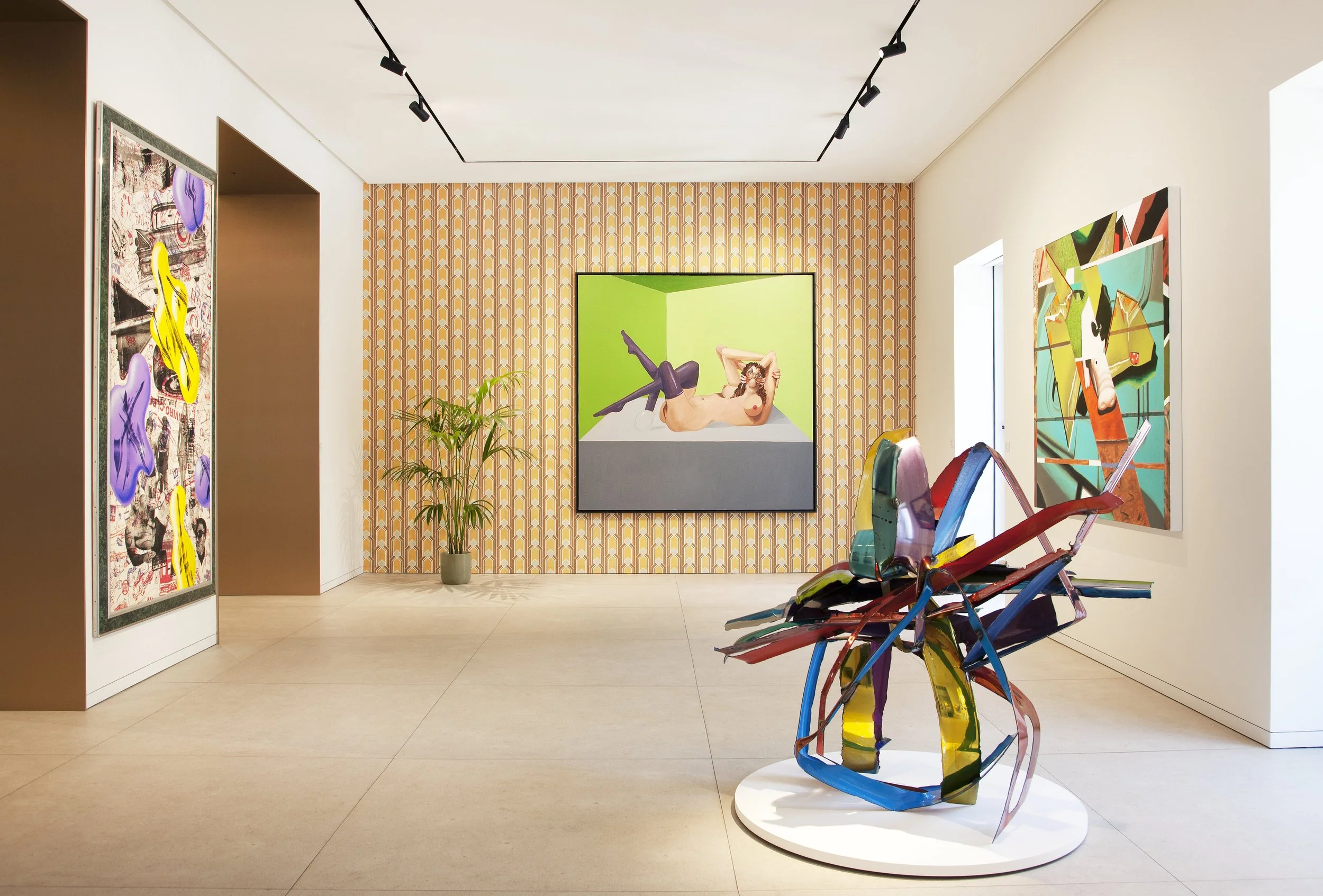
Installation view of the exhibition PIM PAM POP, 2026. Courtesy of Opera Gallery Madrid
Like other artistic movements of the second half of the 20th century, pop art first emerged in the United Kingdom and the United States, where it gained widespread visibility, before rapidly spreading throughout the world in the late 1950s and early 1960s. Universally considered more intellectual and often more scathing than its American counterpart, European pop art developed a language deeply rooted in criticism, irony and satire. This ironic audacity connects Spanish pop art with a long artistic tradition of subversion and double meaning.
Throughout the exhibition, Spanish pop art emerges as a mosaic-like narrative, interweaving political tension, mass culture, art history and popular imagery. Humour becomes both a destination and a weapon: seductive in its colour and visual impact, but incisive in its commentary. Beneath the hypnotic surfaces lies a deep internal turmoil shaped by censorship, repression and resistance. This is the case of Spaniards such as Eduardo Arroyo, Rafael Canogar, Juan Genovés and Luis Gordillo. Canogar, who had begun and consolidated his career as an informalist abstract painter, abandoned abstraction because he found it to be a limited and perhaps elitist language. Isabel Oliver, considered one of the few female artists who developed her work in the social and political context of late Francoism, also sends a clear message of criticism of the domestication of women under the dictatorship.
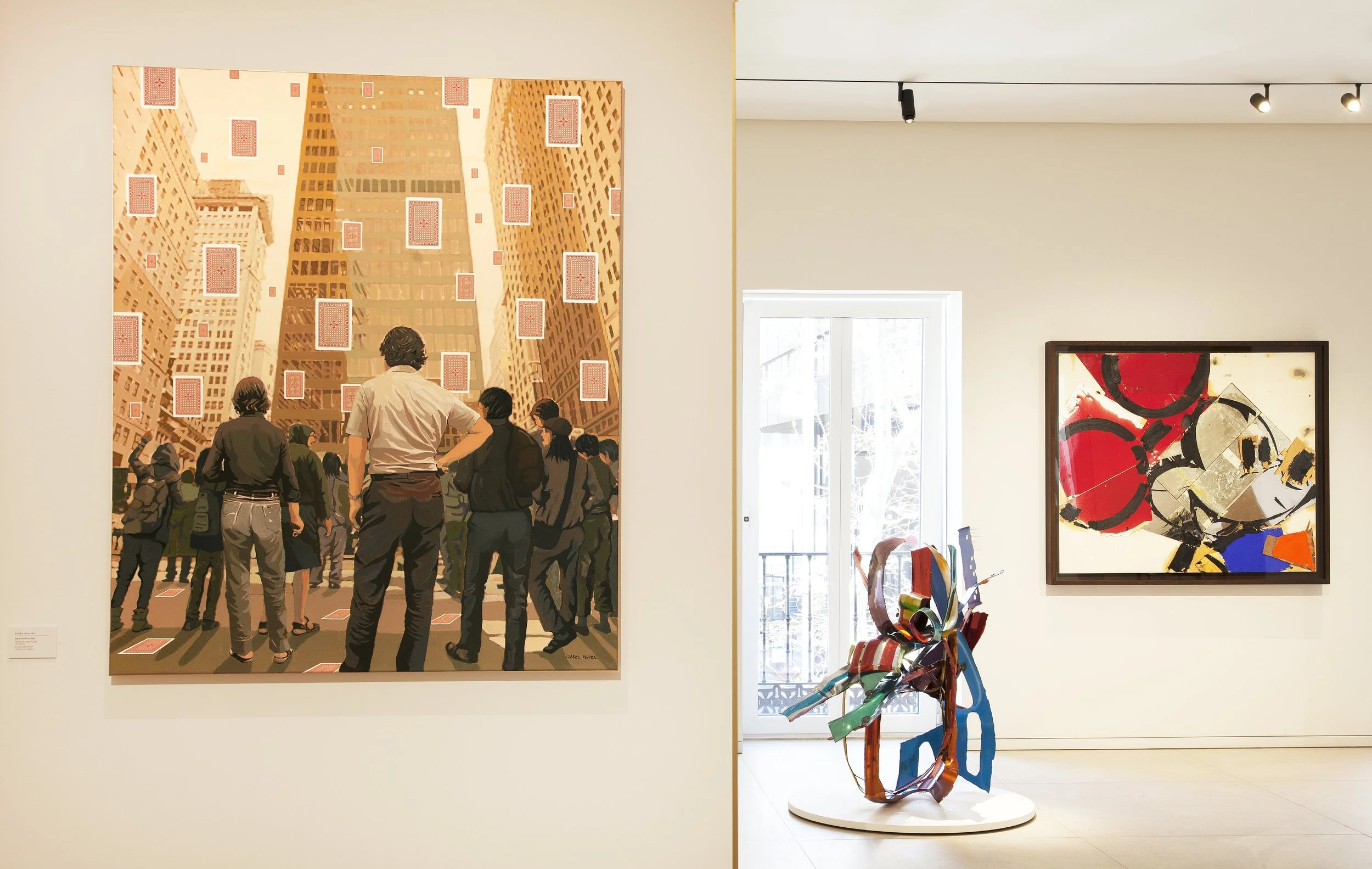
Installation view of the exhibition PIM PAM POP, 2026. Courtesy of Opera Gallery Madrid